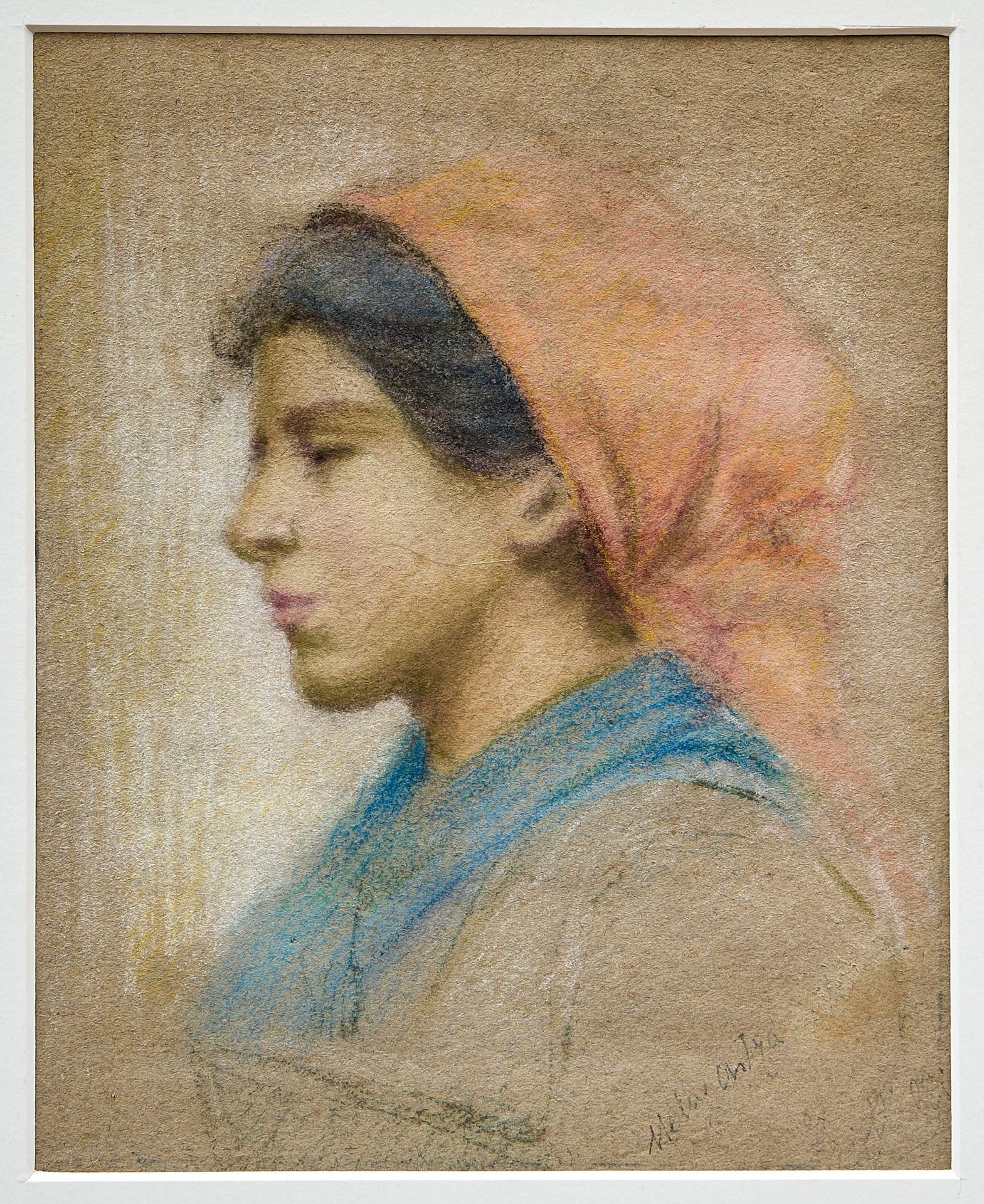
Fritz Brandt (1853 - 1905)
Fritz Brandt (1853-1905) was a distinguished German landscape and architecture painter, primarily celebrated for his evocative depictions of Italian scenery and vedute. Born in Berlin, Brandt’s artistic journey led him to become a significant figure in late 19th-century European art, capturing the picturesque charm of Italy with a refined and atmospheric hand. His works are characterized by their meticulous detail, harmonious compositions, and a keen sensitivity to light and mood, making him a cherished artist among collectors and art enthusiasts. Brandt's legacy continues to resonate, with his paintings frequently appearing in auctions and maintaining a presence in art historical discourse.
His artistic career, though spanning a relatively short period of active exhibition and creation, left a substantial body of work that eloquently speaks to his talent and dedication. Brandt's ability to imbue his landscapes with a sense of tranquility and a deep appreciation for classical beauty solidified his reputation during his lifetime and ensures his enduring appeal in the present day. Through his brush, he transported viewers to the sun-drenched coasts and historic cities of Italy, offering timeless glimpses into a bygone era.
Early Life and Artistic Formation
Born in Berlin, Germany, in 1853, Fritz Brandt embarked on his formal artistic education at the prestigious Berlin Academy of Fine Arts. This institution, renowned for its rigorous classical training, provided Brandt with a solid foundation in drawing, composition, and painting techniques. During his time at the Academy, he had the privilege of studying under the tutelage of Hans Fredrik Gude (1825–1903), a highly influential Norwegian romanticist painter. Gude, known for his masterful landscapes, particularly those depicting Norwegian fjords and coastal scenes, undoubtedly instilled in Brandt an appreciation for natural beauty and atmospheric rendering.
Gude’s instruction played a crucial role in shaping Brandt’s early artistic sensibilities, guiding him towards a specialization in landscape painting. While Gude's influence provided a strong academic grounding, Brandt soon began to develop his own distinctive style, gravitating towards the warmer climes and classical motifs of Southern Europe. This foundational period in Berlin was essential in honing the skills that would later define his celebrated Italian landscapes and vedute, preparing him for the significant move that would largely shape the remainder of his career.
Artistic Journey and Style in Italy
Fritz Brandt began participating in art exhibitions as early as 1883, indicating his emerging presence in the German art scene. However, it was his relocation to Rome in 1889 that truly marked a pivotal turning point in his artistic development. The Eternal City and its surrounding landscapes provided an endless source of inspiration, becoming the primary subject matter for the rest of his life. His decision to establish himself in Italy allowed him to fully immerse himself in the classical traditions and the vibrant natural beauty of the region.
In Rome, Brandt found his true artistic calling, specializing in Italian landscapes and vedute. His paintings frequently depicted the sun-drenched coasts, ancient ruins, bustling cityscapes, and serene river valleys of Italy. He became adept at capturing the unique light and atmosphere of the Mediterranean, often employing a nuanced, tonal palette that lent a sense of realism and tranquility to his works. Brandt's meticulous attention to architectural details, combined with his skill in rendering natural elements, created compelling and immersive scenes.
Brandt's style can be characterized by its blend of academic precision with a romantic sensibility. He masterfully handled perspective and composition, often leading the viewer's eye through intricate details to expansive vistas. The human element, though not always central, often appeared in his works, such as "Children on the Italian Beach" or "Portrait of a young Roman woman named Astra," adding a touch of narrative or local flavor to his grander landscapes. His ability to evoke the historical grandeur and the everyday charm of Italy set his work apart.
Throughout his active years, Brandt was a full member of the German Artists' Association (Deutscher Künstlerbund), a testament to his recognized standing within the German art community, despite his primary residence and focus being in Italy. This affiliation underscored his continued connection to his homeland while he forged his reputation as a celebrated painter of Italian scenes. His paintings offered a nostalgic and idealized view of Italy that resonated deeply with audiences in Germany and beyond.
Notable Works and Artistic Legacy
Although Fritz Brandt did not produce what would be traditionally termed a "discography" in the musical sense, his body of painted works serves as his enduring artistic output. His notable paintings, which are frequently encountered in auctions and private collections, showcase his thematic preferences and stylistic prowess. These works often depict iconic Italian locales, along with charming everyday scenes, solidifying his reputation as a master of the genre. His compositions demonstrate a consistent quality and a deep understanding of his chosen subjects.
Among his celebrated works are several captivating interpretations of Italian cities and natural wonders. "Verona, View of Old Houses on the Etsch" and "Ponte Navi in Verona" highlight his skill in architectural painting and his ability to capture urban charm. The dramatic "The Waterfalls in Tivoli," also known as "Cascate di Tivoli, 1891," exemplifies his command over dynamic natural landscapes and atmospheric effects. These pieces often reflect the romantic appeal of Italy to 19th-century artists and travelers.
Coastal scenes were another significant part of Brandt's repertoire. Paintings like "Italian seaside," "Ville sur la côte italienne," "Abendliche Küstenlandschaft, 1895" (Evening Coastal Landscape), and "ITALIAN COASTAL TOWN BY MOONLIGHT" showcase his ability to render the serene and dramatic beauty of the Mediterranean coast. These works often feature fishing boats, tranquil waters, and dramatic skies, reflecting a peaceful yet powerful natural world.
Brandt also painted scenes that captured local life and historical sites. "Village life by the coast, 1900," "Children on the Italian Beach," and "Fischerboote vor Capri" provide glimpses into the daily rhythms of Italian coastal communities. His works occasionally extended beyond Italy, as seen in "Dresden – Brühlsche Terrasse mit Blick auf die Augustusbrücke, 1902," demonstrating his versatility and perhaps a nod to his German heritage.
Other notable paintings include "Riva del Garda, 1889", "Abbazia di San Gregorio, 1884" (Abbey of San Gregorio, Venice), and "AUF DEM FORUM ROMANUM, 1883" (In the Roman Forum). These titles demonstrate the breadth of his travels and the diverse historical and natural wonders that drew his artistic eye. Each work contributes to a comprehensive visual record of Italy as seen through the eyes of a highly skilled German painter.
Fritz Brandt's artwork has garnered significant attention in the art market, with his pieces being offered at auction multiple times. Realized prices for his paintings have ranged from hundreds to over sixteen thousand US dollars, depending on the size, medium, and subject matter of the artwork. For instance, a painting titled "AMALFI" set a record price for the artist at auction in 2021, selling for 16,405 USD. This consistent presence and strong performance in the auction market underscore the enduring value and desirability of his work among collectors.
The continued interest in his art, decades after his passing, speaks volumes about his artistic quality and the lasting appeal of his chosen subjects. His paintings are not merely topographical representations but are infused with an emotional depth that allows viewers to connect with the landscapes and scenes he depicted. Brandt's ability to translate the beauty of Italy onto canvas has ensured his place in the annals of 19th-century landscape painting.
Recognition and Enduring Presence
While the concept of "awards" in the modern sense might not directly apply to a 19th-century artist like Fritz Brandt, his recognition came in other forms. His active participation in art exhibitions from 1883 onwards established his presence and reputation within artistic circles. More significantly, his membership as an ordinary member of the German Artists' Association highlighted his acceptance and respect among his peers in Germany. These affiliations and opportunities to exhibit were crucial forms of validation for artists of his era.
The most substantial testament to Brandt's enduring recognition is the continued interest in his work in the contemporary art market. His paintings are regularly featured in international auctions, attracting bids and demonstrating their ongoing value. This sustained market activity, decades after his death, serves as a powerful indicator of his artistic legacy and the appreciation for his unique contribution to landscape painting. Collectors worldwide continue to seek out his atmospheric Italian scenes.
Legacy and Contemporary Relevance
Fritz Brandt passed away on June 13, 1905, in Nettuno, near Rome, and was laid to rest in the Protestant Cemetery in Rome, a fitting final resting place for an artist who dedicated so much of his creative life to Italy. As a historical artist, Brandt does not have "recent projects" in the contemporary sense of new albums or tours. However, his work maintains a vibrant presence through art scholarship, museum collections (though specific museums were not identified in the search), and the active international art market.
His paintings continue to be a subject of study for art historians interested in 19th-century German and Italian landscape traditions. The detailed depictions of Italian vedute provide valuable historical and cultural insights into the places and architectural styles of the period. Furthermore, the aesthetic appeal of his works ensures they remain coveted pieces for private collectors and institutions alike.
Auction houses frequently list Brandt's works, with sales scheduled even into the coming months and years (e.g., "Children on the Italian Beach" and "Dresden – Brühlsche Terrasse mit Blick auf die Augustusbrücke" listed for March 2025 auctions, and "Evening Coastal Landscape" for January 2025). This consistent auction activity underscores the ongoing appreciation for his skill and the timeless beauty of his subjects. His art serves as a bridge between the past and present, allowing new generations to appreciate the romantic vision of Italy that he so expertly captured. Brandt's legacy is firmly established through the enduring appeal and continued market presence of his exquisite landscape paintings.

 EN
EN  NL
NL FR
FR