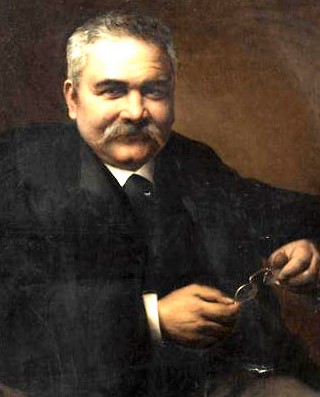
Auguste Joseph Truphème, born in Aix-en-Provence on January 23, 1836, was a distinguished French painter who left an indelible mark on 19th-century art. He is widely celebrated for his evocative genre scenes, which often captured the intimate and everyday moments of school life, as well as his insightful portraiture. Truphème's work provides a fascinating visual record of French society during his era.
His artistic career spanned several decades, from his first exhibitions in 1865 until his passing in Paris on June 10, 1898. Truphème's contributions were recognized through various accolades, including medals at the Salon des Artistes Français and the prestigious Légion d'honneur, solidifying his reputation as a respected figure within the academic tradition of French painting.
Early Life and Artistic Formation
Born in the picturesque city of Aix-en-Provence, Auguste Joseph Truphème's artistic journey began with rigorous training under some of the most prominent masters of his time. He honed his craft under the tutelage of esteemed painters such as William Bouguereau, Hippolyte Flandrin, and Jean-Jacques Henner. These influential figures instilled in him a strong foundation in classical drawing, composition, and academic realism, which would define his mature style.
The 19th century in France was a period of flourishing artistic academies and public exhibitions, with the Salon des Artistes Français serving as the primary platform for artists to showcase their work and gain recognition. Truphème actively participated in this vibrant art scene, making his debut at the Salon in 1865. He continued to exhibit there consistently throughout his career until his death, demonstrating his dedication and commitment to his craft.
Beyond his prolific painting career, Truphème also contributed to art education. He served as the director of the higher drawing course for the City of Paris, a role that underscored his standing as a skilled artist and a respected instructor. This position allowed him to influence a new generation of artists, passing on the principles and techniques he had mastered.
Defining Artistic Style and Themes
Auguste Joseph Truphème carved out a distinctive niche for himself through his specialized focus on genre scenes, particularly those depicting the lives of schoolchildren. His paintings frequently captured candid moments within classrooms, playgrounds, and various educational settings, offering a charming and often nostalgic glimpse into 19th-century pedagogy and childhood. These works are characterized by their keen observation, narrative depth, and a remarkable ability to convey emotion and character.
His realist style, informed by his academic training, allowed him to render figures and environments with precision and naturalism. Truphème paid meticulous attention to detail, from the expressions on his subjects' faces to the textures of their clothing and the intricacies of their surroundings. This commitment to realism made his genre scenes highly relatable and popular among the public of his time.
In addition to his beloved school scenes, Truphème was also a skilled portraitist. His portraits captured the likeness and personality of his sitters with sensitivity and elegance, reflecting the prevailing tastes for academic portraiture. The widespread appeal of his work is further evidenced by the fact that his paintings were frequently reproduced in the popular press of the era, such as Le Petit Journal illustré, making his art accessible to a broader audience beyond the traditional Salon visitors.
Key Works and Exhibitions
Throughout his career, Auguste Joseph Truphème created numerous works that captured the imagination of the public and critics alike. His consistency in exhibiting at the Salon des Artistes Français from 1865 until his passing allowed him to showcase a significant body of work, many of which are now held in prominent museum collections. His genre scenes, especially those focusing on children and education, remain among his most iconic contributions.
One of his notable paintings, "En retenue" (Held Back), is a prime example of his captivating school scenes. A larger version of this painting, measuring 145 x 207 cm, was exhibited at the Salon des Artistes Français in 1888. Its compelling subject matter and masterful composition led to its acquisition by the city of Paris on July 24, 1888. This significant work is now a permanent part of the collection at Le Petit Palais, the Musée des Beaux-arts de la Ville de Paris, where it can be admired on the ground floor. As was common for successful paintings of the period, Truphème produced smaller copies for private collectors.
Other significant works that illustrate his focus and skill include "Le Dimanche des Rameaux" (Palm Sunday) at the Musée Jeanne-d'Aboville in La Fère, and a series of educational scenes like "Une leçon de dessin à l'école Cochin" (A Drawing Lesson at Cochin School, circa 1874) and "Les Élèves de l'école communale à l'exercice du chassepot à Châtillon-sous-Bagneux" (Communal School Pupils Practicing with the Chassepot Rifle at Châtillon-sous-Bagneux, 1880).
Further exploring school life, he painted "Le Déjeuner dans une école communale du 16e arrondissement de Paris" (Lunch in a Communal School of the 16th Arrondissement of Paris, circa 1881), "Travail manuel à l'école communale" (Manual Work at the Communal School, circa 1883), and "Une leçon de chant dans une école du 16e arrondissement" (A Singing Lesson in a School of the 16th Arrondissement, before 1884). These works vividly depict the various activities and routines of children in 19th-century French schools.
His portfolio also includes "La Coupe et couture, dans une école communale de la rue de la Tombe-Issoire" (Cutting and Sewing, in a Communal School on Rue de la Tombe-Issoire, circa 1886), "À l'école. La leçon d'écriture" (At School. The Writing Lesson, circa 1885), and "Un jour de récompenses" (A Day of Rewards, circa 1894). Truphème's works are represented in several prominent French museums, including those in Aix-en-Provence, Carpentras, and Louviers, in addition to the prestigious Musée d'Orsay in Paris.
Accolades and Institutional Recognition
Auguste Joseph Truphème's talent and dedication to his art did not go unnoticed by the French artistic establishment. Throughout his active exhibiting years at the Salon des Artistes Français, he received significant recognition for his contributions. In 1884, he was awarded a Bronze Medal, marking an early acknowledgement of his burgeoning career. This was followed by a more distinguished Second Class Medal in 1888, further cementing his reputation as a painter of considerable skill and public appeal.
The pinnacle of his official recognition arrived in 1895 when he was bestowed with the esteemed title of Chevalier de la Légion d'honneur (Knight of the Legion of Honour). This highly prestigious award, a testament to his significant contributions to French culture and art, placed him among the most celebrated artists of his generation.
Beyond these honors, Truphème's institutional presence was substantial. His role as director of the higher drawing course of the City of Paris highlights his influence on art education and his standing within the artistic community. Furthermore, his works are proudly held in the collections of several reputable museums across France, including those in Aix-en-Provence, Carpentras, Louviers, the Musée d'Orsay, and Le Petit Palais in Paris. These public holdings ensure that his artistic legacy continues to be preserved and appreciated by future generations of art enthusiasts and scholars.
Enduring Legacy and Market Presence
Although Auguste Joseph Truphème passed away in 1898, his artistic legacy continues to resonate in the 21st century. Far from fading into obscurity, his works are regularly featured in art auctions, demonstrating a sustained interest from collectors and a robust market presence. The enduring appeal of his genre scenes and portraits ensures that his name remains relevant in discussions of 19th-century French painting.
For example, in 2022, his painting "The Class Pranksters" achieved a remarkable price of 22,680 USD at a Sotheby's New York auction, setting a record for the artist. This significant sale underscores the high value placed on his detailed and emotionally resonant works. His paintings, with realized prices ranging from 22 USD to this record-setting amount, depending on their size and medium, are frequently offered at auction, allowing new generations of collectors to acquire pieces of his historical narrative.
His inclusion in the permanent collections of esteemed institutions such as the Musée d'Orsay and Le Petit Palais ensures his continued visibility and study. These museums serve as vital repositories of his work, allowing the public to engage directly with his artistic vision and appreciate his contribution to French academic painting. The detailed cataloging and display of his art in these major cultural institutions further cement his place in art history.
Truphème's art, particularly his school scenes, offers invaluable insights into the social history and educational practices of late 19th-century France. Scholars and art historians continue to analyze his work for its documentary value, its artistic merit, and its reflection of societal norms and aspirations. Thus, while there are no "recent projects" in the contemporary sense for an artist who died in 1898, his legacy thrives through continuous academic interest, robust market activity, and prominent museum displays, affirming his lasting impact on the world of art.
Auguste Joseph Truphème stands as a testament to the enduring power of academic painting in documenting and interpreting its era. His legacy as a master of genre scenes and portraiture continues to be celebrated, proving that his detailed observations of life and his technical prowess remain as compelling today as they were over a century ago.

 EN
EN  NL
NL FR
FR