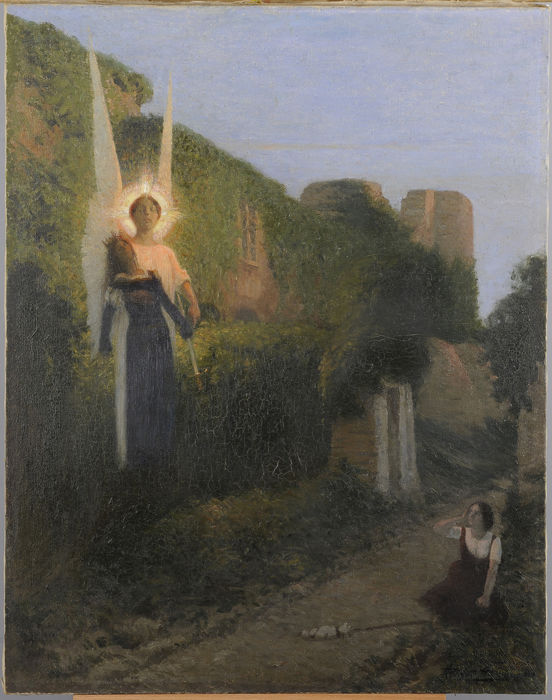
Hippolyte Fournier (1853 - 1926)
Hippolyte Émile Louis Fournier, born on March 4, 1853, in Rablay-sur-Layon, France, was a highly versatile and influential French artist whose career spanned painting, sculpture, and illustration. His artistic journey, which concluded with his death on January 12, 1926, in Gonnord, witnessed a fascinating evolution in style, moving from traditional academic approaches to the profound depths of Symbolism and later embracing the sophisticated aesthetics of Art Deco. Fournier’s oeuvre remains an important contribution to the artistic landscape of the late 19th and early 20th centuries, reflecting the changing currents of French art.
Throughout his prolific career, Fournier garnered recognition for his diverse subjects, including poignant portraits, grand history paintings, evocative genre scenes inspired by his native Anjou, and serene landscapes. Beyond his canvases, his talent extended to creating striking Art Deco sculptures and insightful illustrations that captured the spirit of his time. His works are not merely historical records; they are celebrated elements of France’s cultural heritage, with several pieces even designated as historical monuments, ensuring his enduring legacy in the art world.
Early Life and Artistic Education
Fournier’s artistic inclinations became evident early in his life. He commenced his formal artistic training in Angers under the guidance of Eugène Brunclair. This foundational period allowed him to develop essential technical skills and a disciplined approach to art. His ambition soon led him to Paris, the vibrant heart of the European art scene, where he enrolled in the prestigious Académie Julian.
At the Académie Julian, a renowned private art school that attracted aspiring artists from across the globe, Fournier immersed himself in a dynamic environment. It was here that he forged a significant friendship with Henri Martin, another promising painter who would also leave a notable mark on French art. In 1879, Fournier further refined his skills and artistic vision by becoming a student of the distinguished history painter Jean-Paul Laurens, a master known for his rigorous academic style and powerful historical narratives.
His education at the Académie Julian and under Laurens provided him with a robust grounding in classical techniques and composition, preparing him for a successful career. This academic rigor would serve as a strong base from which he would later explore more modern and expressive styles. The friendships and mentorships he cultivated during these formative years were instrumental in shaping his artistic identity and opening doors to future opportunities in the competitive Parisian art world.
Evolution of Artistic Style and Major Works
Hippolyte Fournier’s artistic journey was marked by a compelling evolution, showcasing his adaptability and responsiveness to the prevailing artistic movements of his era. He debuted at the Salon des Artistes Français in 1881, a significant platform for artists to present their work to the public and critics. Initially, his contributions aligned with the traditional style favored by the Paris Salon, featuring meticulously rendered portraits, grand history paintings, and captivating genre scenes that often drew inspiration from the picturesque region of Anjou.
Around 1890, a pivotal shift occurred in Fournier's artistic approach. He began to embrace Symbolism, a movement characterized by its emphasis on subjective experiences, spiritual truths, and the evocative power of imagery rather than direct representation. This period saw him expressing a profound attachment to Christian iconography and figures, infusing his works with deeper symbolic meaning and emotional resonance. His paintings from this time often conveyed contemplative and spiritual themes, moving beyond mere visual depiction.
Among the most notable works from his Symbolist period are "La Foi" (Faith), a powerful painting housed in the church of Saint-Aubin in Chambellay, and "Procession de la Fête-Dieu à Gonnord" (Corpus Christi Procession at Gonnord), found in the church of Saint-Pierre in Valanjou. Both of these significant religious works, along with his painting "Rêverie" (Reverie), have been recognized for their cultural importance and are listed as historical monuments in France, underscoring their enduring artistic and historical value.
As the 20th century dawned, Fournier’s style underwent another transformation, aligning itself with the emerging aesthetics of Art Deco. This shift marked a move towards more modern compositions and subject matter. He also explored the human form through nude studies, reflecting a continued engagement with classical themes interpreted through a contemporary lens. His first solo exhibition took place in 1894, a notable milestone in his career, which featured his acclaimed work "La Jeune Mère" (The Young Mother), a tender portrayal that exemplifies his skill in genre painting.
Sculptural Contributions and Illustrations
Beyond his celebrated painting career, Hippolyte Fournier also distinguished himself as a sculptor and illustrator. His sculptural output, particularly towards the end of his career, showed a strong affinity for the Art Deco style. He created elegant and dynamic sculptures of dancers, often crafted in vibrant patinated and gilded bronze, sometimes incorporating ivory. These pieces exemplify the grace and stylized forms characteristic of the Art Deco movement, further demonstrating his versatility and command of different artistic mediums.
In the final years of his life, Fournier also ventured into the world of illustration, making a notable impact through his contributions to the popular weekly magazine 'La Vie Parisienne'. From 1924 until his death, he produced illustrations that humorously commented on the lifestyle of the modern Parisian woman. These works showcased a lighter, more satirical side of his artistic personality, providing social commentary through charming and witty visuals that resonated with the public.
Exhibitions and Recognition
Fournier was a regular exhibitor at the Salon des Artistes Français, a testament to his consistent output and the respect he commanded within the art community. His participation in such prestigious exhibitions allowed him to present his evolving body of work to a broad audience and maintain his presence in the competitive art scene of Paris. Being accepted as a member of the Salon society further solidified his standing as a recognized artist.
In 1907, he participated in the second congress of the International Union of Fine Arts and Letters, an event held within the framework of the "Musée du Peuple" (People's Museum) founded by Alexis Mérodack-Jeaneau. This involvement highlights his engagement with broader artistic and cultural initiatives of his time, suggesting an interest not only in creating art but also in its societal role and dissemination.
Legacy and Market Presence
Despite passing away in 1926, Hippolyte Fournier’s artistic legacy continues to thrive, with his works holding a significant place in France's cultural heritage collections. His diverse output, ranging from the spiritual depth of Symbolism to the sleek elegance of Art Deco, ensures his relevance to scholars and collectors alike. The continued interest in his work is reflected in its consistent presence in the art market.
Fournier's artworks have been offered at auction multiple times, demonstrating an ongoing demand and appreciation for his talent. Recent sales figures confirm the enduring value of his pieces, with individual artworks fetching notable prices. For instance, in 2024, a work titled "HEILIGE CÄCILIA – ALLEGORIE DER MUSIK" (Saint Cecilia – Allegory of Music) achieved a sale price of 5,547 USD at auction, setting a record for the artist.
Various art platforms, such as MutualArt and Artnet, meticulously catalog his artworks, auction results, and exhibitions, providing comprehensive resources for those seeking to delve deeper into his career. Furthermore, his attributed works are frequently available through reputable galleries, allowing contemporary collectors to acquire pieces by this esteemed French master. The consistent performance of his art in the secondary market underscores his lasting appeal and historical significance.
Hippolyte Fournier’s multifaceted career as a painter, sculptor, and illustrator, combined with his stylistic evolution and the historical importance of his works, ensures his continued recognition. His ability to adapt to and influence different artistic currents of his time solidifies his position as a notable figure in French art history, whose contributions continue to be studied, exhibited, and admired by art enthusiasts worldwide.

 EN
EN  NL
NL FR
FR