Roger Jammes (1875 - 1918)
Roger Jammes was a notable French painter whose artistic career, though tragically cut short by World War I, left a distinctive mark on the regional art scene of early 20th-century France. Born in 1875, Jammes hailed from Toulouse, a city with a rich cultural heritage in the Occitanie region. His brief but impactful life spanned a pivotal era in art history, witnessing the late bloom of Impressionism and the nascent stirrings of modern art movements. He is primarily recognized for his portraiture, though his body of work also encompassed landscapes, genre scenes, and historical subjects, revealing a versatile artistic temperament.
Jammes's contribution extended beyond his canvases. He was a significant figure in the establishment of the Méridionaux Artists society, co-founding this important regional artistic collective in 1905. This initiative underscores his commitment to fostering a vibrant artistic community in the south of France, providing a platform for artists to exhibit and discuss their work outside the dominant Parisian art institutions. His untimely death in 1918, at the close of the Great War, represents a profound loss to the art world, cutting short a promising career that had shown considerable development and breadth.
Early Life and Artistic Formation
Born in 1875, Roger Jammes's formative years were spent in Toulouse, a city known for its architectural beauty and academic institutions. Details regarding his specific artistic training are scarce in publicly available records, but it is highly probable that he received formal instruction in the fine arts, likely within local academies or private ateliers in Toulouse. The artistic environment of the late 19th and early 20th centuries in France was dynamic, characterized by a blend of academic traditions and revolutionary movements. Young artists like Jammes would have been exposed to a broad spectrum of influences.
The turn of the century saw a diversification of artistic hubs beyond Paris, with regional centers developing their unique artistic identities. Toulouse, with its own artistic community, provided a fertile ground for Jammes to hone his skills and develop his individual style. His decision to co-found the Méridionaux Artists society in 1905 was a clear indication of his leadership within this regional context. This society aimed to promote the arts and offer exhibition opportunities for artists working in the south of France, fostering a sense of collective identity and shared purpose among them.
Artistic Style and Influences
Roger Jammes's artistic style is best described as a blend of traditional techniques with elements that suggest an engagement with contemporary movements, particularly Impressionism. He was noted for his portraiture, a genre that demands keen observation and a subtle understanding of human character. His portraits often captured the likeness and essence of his subjects with a nuanced approach to color and light.
Beyond portraits, Jammes explored landscapes, genre scenes, and historical subjects. In these broader themes, his painting style is described as becoming "more fluid," as if he "regained joy in the art of painting." This fluidity suggests a less rigid, more expressive brushwork characteristic of Impressionistic tendencies, where capturing fleeting moments and the effects of light were paramount. One of his known works, "Woman in a Park" from 1903, has been described as a "beautiful French impressionist painting" that also shows proximity to "pre-Raphaelite painters."
The juxtaposition of Impressionistic fluidity with a sensibility close to the Pre-Raphaelites indicates a sophisticated and eclectic artistic vision. While Impressionism focused on light and atmosphere, the Pre-Raphaelite Brotherhood, though English and earlier, emphasized vivid detail, intense colors, and often drew inspiration from literary and mythological themes. This suggests Jammes was not confined to a single artistic dogma but rather synthesized different aesthetic principles to create his unique visual language, enriching his works with both immediate sensory appeal and underlying symbolic depth.
Notable Works and Artistic Output
While a comprehensive catalog of Roger Jammes's complete artistic output is not readily available, several key works and descriptions provide insight into his thematic interests and stylistic evolution. His primary focus was portraiture, a demanding art form that requires not only technical skill but also an ability to convey personality and emotion. These portraits would have served both as commissioned works and as personal artistic explorations, capturing individuals from his community and beyond.
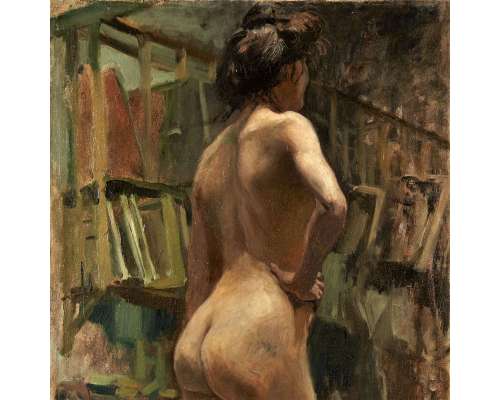
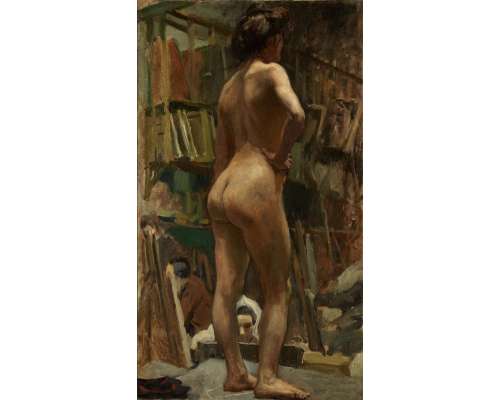
Among his specifically mentioned works is "Model in the Studio" (also referred to as "Model In Studio Oil On Canvas"). This piece highlights his engagement with the figure and the artistic process itself, a common theme among artists who reflect on their craft. Another significant painting, "Woman in a Park," dated 1903, exemplifies his landscape and genre work. Described as a French Impressionist painting, it captures a young woman in an outdoor setting, likely employing the characteristic broken brushstrokes and vibrant palette of the Impressionist movement to render the play of light and shadow within the park environment.
His exploration of genre and history scenes further demonstrates his versatility. These subjects allowed him to delve into narrative and allegorical content, moving beyond individual likenesses to depict broader human experiences or historical events. The transition in his style to a more fluid approach when tackling these subjects suggests an artistic freedom and perhaps a greater emotional investment in the narrative aspects of his painting. His works are occasionally found on the art market, indicating their continued value and recognition among collectors of 19th and early 20th-century French art.
Recognition and Legacy
During his lifetime, Roger Jammes gained recognition through his involvement with the Méridionaux Artists society, which he co-founded in Toulouse in 1905. This society played a crucial role in establishing and promoting regional art, allowing artists like Jammes to exhibit their works and engage with a local audience and fellow artists. His role as a co-founder indicates his standing and influence within this artistic community.
Specific awards for Jammes are not widely documented, which is common for many artists whose careers were primarily regional or whose lives were cut short. However, the consistent appearance of his works in art galleries and on platforms like Antikeo, Proantic, and eBay signifies a sustained, albeit niche, appreciation for his art in the posthumous market. The descriptive language used for his works, such as "beautiful French impressionist painting," further attests to the quality and enduring appeal of his creations.
His legacy lies in the tangible artworks he left behind and his contribution to the regional art movement in France. The fact that he is still remembered and his works are sought after by collectors over a century after his death speaks volumes about the lasting quality and historical importance of his artistic output. He represents a cohort of artists who, while perhaps not reaching the global fame of their Parisian contemporaries, were vital to the cultural fabric of their regions.
Historical Context and Posthumous Presence
Roger Jammes’s life and career unfolded against a backdrop of significant historical change, culminating in his death at the end of World War I in 1918. This period of global conflict undoubtedly impacted the lives and careers of many artists, influencing both the themes they explored and the availability of opportunities for exhibition and patronage. His death at the age of 43 suggests a life and career that were tragically curtailed, leaving open questions about the further artistic developments he might have achieved.
In terms of "recent projects" (referring to 2024/2025), there are no contemporary artistic endeavors by Roger Jammes, given his passing over a century ago. However, his "recent projects" manifest in the ongoing interest in his historical works within the art market. His paintings continue to be listed and sold by galleries and auction houses specializing in 19th and early 20th-century art. This posthumous presence in the art market serves as a continuous testament to his enduring value and the appreciation for his unique contribution to French painting.
Art collectors and enthusiasts continue to seek out his paintings, such as "Model in the Studio" and "Woman in a Park," which are offered through various art dealers. This active market for his works ensures that his artistic legacy remains alive, allowing new generations to discover and appreciate the talent of this Toulouse-born painter. His art provides a valuable window into the regional artistic trends and stylistic nuances of France during a transformative era, cementing his place in the broader narrative of art history.

 EN
EN  NL
NL FR
FR