Biography

Masson Clovis-Edmond (1838-1913)

Clovis-Edmond Masson (1838 - 1913)

Clovis-Edmond Masson, born in Paris on March 7, 1838, stands as a distinguished figure in the realm of 19th-century French animal sculpture. His artistic career, spanning several decades, was dedicated to capturing the raw vitality, elegant forms, and dynamic movements of the animal kingdom. Masson became a prominent practitioner of the "animalier" style, a genre that flourished in France during his time, bringing a rigorous naturalism and profound understanding of animal anatomy to his extensive body of work. His contributions have left an indelible mark on the history of art.

Throughout his life, Masson’s sculptures, primarily executed in bronze, were celebrated for their exquisite detail and the palpable sense of life they conveyed. He specialized in depicting both wild and domestic animals, with a particular fondness for large cats and powerful beasts. His enduring legacy is reflected in the continued admiration for his pieces, which are actively sought after by collectors and housed in prestigious institutions around the world. Masson died in 1913, leaving behind a rich artistic heritage that continues to be appreciated today.

Early Life and Artistic Training

Clovis-Edmond Masson's artistic journey began in his native Paris. From an early age, he exhibited a natural inclination towards drawing and modeling, showing a deep fascination with animals. This innate talent was nurtured by his family, who recognized his potential and encouraged him to pursue a career in sculpture. His formative years were crucial in developing the observational skills that would become a hallmark of his later work. He spent countless hours observing animals, notably in the Parisian parks, a practice that undoubtedly informed his realistic depictions.

Masson received a rigorous artistic education at the École des Beaux-Arts in Paris, where he honed his technical abilities. He was fortunate to study under some of the most influential sculptors of his era. Notably, he was a pupil of Antoine-Louis Barye, the undisputed master of animal sculpture in the 19th century. Barye's meticulous approach to anatomy and his focus on depicting animals with scientific accuracy profoundly influenced Masson's own style. In addition to Barye, Masson also trained with other respected sculptors, including Rouillard and Santiago, further broadening his artistic perspectives and techniques.

Artistic Style and Philosophy

Masson's artistic style is firmly rooted in the naturalist tradition of the 19th-century French animalier movement. His works are characterized by their powerful presence, intricate detailing, and an exceptional ability to convey the essence and movement of his subjects. He was renowned for his capacity to infuse his sculptures with a sense of life and dynamism, making his animals appear caught in a fleeting moment of action or repose. This ability to capture vitality and elegance was central to his artistic philosophy.

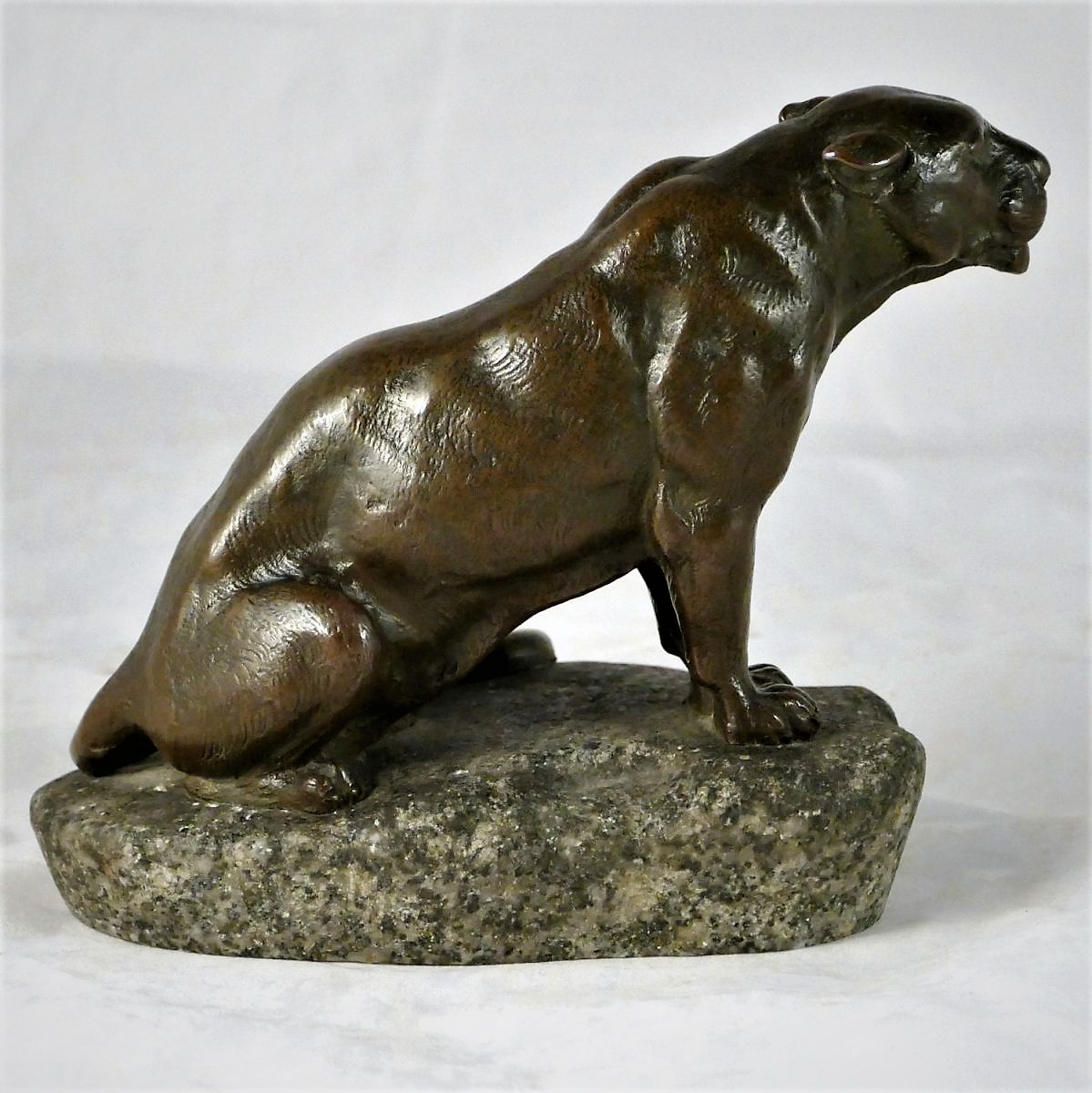
He primarily focused on wild animals, particularly large cats such as lions, tigers, and panthers, mirroring the preferences of his mentor, Barye. Masson's bestiary, however, was rich and varied, extending to include deer, fawns, horses, and various hunting dogs. His sculptures often depicted intense interactions, such as hunting scenes or combat groups, demonstrating a keen understanding of animal behavior and the drama of the natural world. This comprehensive approach to wildlife set him apart as a versatile and perceptive artist.

Major Works and Exhibitions

Clovis-Edmond Masson was a prolific exhibitor at the prestigious Paris Salon, presenting his works regularly from 1867 until 1909. This consistent presence at the Salon, the preeminent art exhibition in France, underscores his standing and recognition within the artistic community. His debut in 1867 featured "Indian Tiger Hunt" in plaster, signaling his specialization in animalier sculpture from the outset. Over his career, he exhibited more than 50 distinct sculptures, frequently in plaster or wax, which would then often be cast in bronze.

A significant moment in his exhibition history was the 1869 Salon, where he gained particular acclaim for "Tiger looking at its prey" and "Boar surprised by a lion." These early works garnered positive critical attention, with critics praising his vigorous talent and confident artistic personality. His skill in rendering dramatic and powerful animal groups was evident from these initial successes. Such public exposure at the Salon was crucial for sculptors of his era, establishing their reputations and attracting patrons.

Beyond the Salon, Masson also undertook important public and monumental commissions. One of his most notable collaborations was with sculptor Georges Ernest Saulo for the equestrian portrait of King Chulalongkorn (Rama V) of Siam. This impressive monument, cast by the renowned Susse Frères foundry, continues to adorn the Ananta Samakhom Palace square in Bangkok, Thailand. This international commission highlights Masson's esteemed reputation and the global reach of his artistry during his lifetime.

Among his other celebrated individual works, pieces like "Lion rugissant" (Roaring Lion), "Cheval au galop" (Galloping Horse), and "Panthère en chasse" (Hunting Panther) exemplify his command of form and expression. His bronze sculpture "Gorilla striking down a lion" achieved a notable price at auction, demonstrating the high value placed on his dramatic compositions. Another popular and widely diffused work was "Mouse nibbling its sugar" (also known as "Souris aux deux sucres"), which showcased his ability to render charming, smaller-scale subjects with equal mastery and appeal.

Technique and Craftsmanship

Clovis-Edmond Masson utilized a variety of materials in his sculptures, but he is most celebrated for his works in bronze. He also worked with plaster and wax for his models, which were then translated into more permanent forms. The quality of his bronze casts was consistently high, a testament to his exacting standards and his collaboration with esteemed foundries. He primarily worked with foundries such as Thiebault and Susse Frères, known for their expertise in both lost-wax and sand-casting techniques. This ensured that the intricate details of his models were faithfully reproduced in the final bronze pieces.

The choice of bronze as a primary medium allowed Masson to achieve the richness of patina and the lasting durability necessary for his powerful animal forms. He also experimented with other materials such as porcelain, earthenware (noted for its smooth, clear rendering), and gilded bronze, showcasing his versatility and willingness to explore different artistic expressions. The meticulous finishing and attention to surface detail on his bronzes further contributed to their lifelike quality and enduring aesthetic appeal.

Awards and Recognition

During his active career, Clovis-Edmond Masson received formal recognition for his artistic achievements. In 1890, he was awarded an honorable mention at the Salon des Artistes Français. This acknowledgment from a prestigious institution highlighted his skill and contributed to his growing reputation as a significant animal sculptor. While specific major awards beyond this mention are not widely detailed, his consistent exhibition record and the high regard for his works among collectors speak volumes about his critical success and popular appeal.

Legacy and Posthumous Recognition

Clovis-Edmond Masson’s influence on animal sculpture extends far beyond his lifetime. His work remains highly sought after by enthusiasts and collectors of 19th-century sculpture and animal bronzes. The market for his creations is robust, with pieces frequently appearing at auction and often achieving significant prices, demonstrating a sustained and even increasing appreciation for his artistry. His bronze statue, "Chienne Basset et ses chiots," for instance, set a record price for his work at auction in 2020, selling for $5,828.

Examples of Masson’s sculptures are preserved in public collections, including the Walters Art Gallery in Baltimore, Maryland, and the Museum of Nîmes in France. These institutional holdings ensure that his contributions to the animalier movement are accessible to scholars and the general public, perpetuating his legacy. Furthermore, his work is documented in several authoritative art history books, such as "Les Animaliers" by Jane Horswell and "Bronzes of the 19th Century" by Pierre Kjellberg, solidifying his place in art historical discourse.

The artistic tradition continued within his family, as his son, Jules-Edmond Masson (1871-1932), also became an animal sculptor, having studied under his father's tutelage. This familial continuation of the animalier craft further underscores Clovis-Edmond Masson's impact and the enduring appeal of the genre he mastered. His sculptures continue to be celebrated for their realism, dramatic power, and the profound connection they forge with the untamed beauty of the animal world, making him an enduring master of his craft.

Close filter window

Product added to wishlist